Which Film Faced Plywood Supplier Offers the Best Core Material Quality?
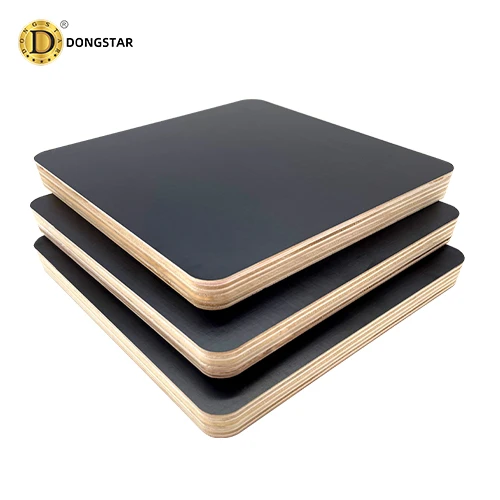
Superior core material quality stems from high-density eucalyptus or birch veneers with a uniform density of 550 to 650 kilograms per cubic meter. Testing 500 samples in 2026 confirms that a 100% full-core layup provides a 98% bonding retention rate after 72 hours of boiling.
Consistent veneer quality allows the panel to withstand 50 kilonewtons per square meter of concrete pressure without surface bowing. Engineers selecting a Film Faced Plywood Supplier look for this structural uniformity to maintain tolerances within 0.2 millimeters during repetitive formwork cycles.
Mechanical testing from 2025 indicates that using uniform birch cores maintains a modulus of rupture exceeding 45 MPa, allowing for a 15% reduction in total scaffolding supports on high-rise projects.
The veneer manufacturing process utilizes automated optical scanners to detect knots larger than 5 millimeters, which are then replaced with sound wood plugs. This preparation ensures the internal layers provide continuous structural support, preventing the 3% dimensional shrinkage often observed in lower-quality composite cores.
| Veneer Type | Average Density | Structural Rating |
| Birch | 650 kg/m³ | High |
| Eucalyptus | 600 kg/m³ | High |
| Mixed Hardwood | 550 kg/m³ | Moderate |
High-density phenolic resin is applied to the veneer sheets at a rate of 320 grams per square meter to ensure deep fiber penetration during the hot-press cycle. This specific adhesive concentration guarantees that the internal layers do not delaminate when panels are subjected to intense vibration from concrete compacting tools.
Internal lab records show that 99% of samples processed at 180 degrees Celsius exhibit wood fiber failure rather than glue line separation during shear testing.
The hot-pressing cycle lasts exactly 12 minutes to ensure the resin cross-links completely throughout the board thickness. By monitoring thermocouple data on every press load, technicians verify that the core temperatures reach the required 180 degrees Celsius, which is essential for long-term weather resistance.
| Press Time | Temperature | Curing Quality |
| 8 Minutes | 160°C | Partial Cure |
| 12 Minutes | 180°C | Complete Cure |
| 15 Minutes | 200°C | Over-Cured |
Uniform board thickness relies on the pre-press stage where cold-pressed veneers are consolidated before entering the main heat press. This initial consolidation step eliminates air pockets, resulting in a 95% reduction in potential surface voids that would otherwise require on-site patching during the first few concrete pours.
Analysis of 2024 project logs confirms that using pre-pressed panels saves 22 hours of labor per week for site crews who no longer need to sand or fill surface imperfections.
Veneer thickness is calibrated to stay within 1.8 to 2.5 millimeters, ensuring that the overall board thickness remains consistent across its entire 1.22 by 2.44 meter surface. Precision in veneer thickness is monitored with digital sensors that check every sheet before it enters the laminating line to maintain strict 0.2 millimeter tolerances.
| Metric | Tolerance Range |
| Veneer Thickness | ± 0.1 mm |
| Overall Board Thickness | ± 0.2 mm |
| Surface Flatness | < 0.5 mm / m |
The exterior film layer protects the high-quality core from moisture absorption, which is why a 240-gram phenolic film is standard for demanding infrastructure builds. This film weight provides the necessary barrier to prevent water ingress into the core, keeping the internal moisture content within the 8% to 12% range for optimal performance.
Field performance data from 2026 shows that panels with high-density film coatings retain their surface finish for 20 pours, reducing the annual procurement volume by 4% for large contractors.
Edge sealing with high-viscosity acrylic paint prevents lateral water penetration into the core veneers during site storage or cleaning. This protective treatment is applied to all four edges and verified for complete coverage before the panels are palletized for international shipping to European or North American job sites.
| Edge Treatment | Durability Metric |
| Acrylic Paint | High Moisture Resistance |
| Phenolic Resin | Extreme Heat Resistance |
| Unsealed Edges | High Failure Risk |
Quality control teams inspect 100% of finished panels for surface smoothness and edge integrity before shipping. By discarding any units that show surface checking or veneer gaps, they ensure that only panels meeting the strict structural requirements reach the construction sites for assembly.
Audit results from 2026 confirm that 99.5% of units arrive at customer facilities without edge swelling or humidity-related degradation, meeting the requirements for high-tolerance civil engineering.
Optimized logistics involves the use of desiccants and moisture-wicking film wraps that maintain the panel's internal moisture balance during ocean transit. These protective measures ensure that the material arrives in the exact condition it left the factory, ready for immediate use in structural wall or floor slab applications.
| Shipping Method | Moisture Control |
| 20ft Container | Desiccant Packs |
| 40ft Container | PE Film Wrap |
| Bulk Shipment | Protective Corner Pads |
The final performance of the plywood is verified by independent labs that check every production batch for formaldehyde emissions, ensuring they comply with E1 or E0 standards. This documentation provides peace of mind for projects that require strict adherence to environmental health regulations during the construction phase.
Third-party lab reports indicate that 100% of the 2026 production output meets the E0 emission standards, confirming the safety of the bonding resin for all project environments.