Scaling the Physical Brain: Why 2026 is the True Inflection Point for Embodied AI
Reading through the latest developments in China's robotics sector, it is clear that we have moved past the "hype cycle" of flashy demos and entered a period of aggressive industrial execution. The shift from conceptual humanoid prototypes to a projected revenue growth of 852%—as seen in AGIBOT’s target to jump from 1.05 billion yuan in 2025 to 10 billion yuan by 2027—indicates that the market is finally solving the "last mile" problem of robotics. This isn't just about making a machine that walks; it is about the convergence of large-model reasoning and hardware durability. When we look at the 20 billion yuan in capital that flooded the sector in Q1 2026 alone, a 60% year-on-year increase, it’s evident that the investment logic has shifted toward specialized components like tactile sensors and high-torque joint modules rather than just general platforms.
The real importance of this trend lies in the concept of the "AI economy" and the consumption of tokens in physical space. Historically, AI was confined to digital screens, but embodied AI turns every physical interaction—grasping a component in a factory or navigating a crowded hospital corridor—into a data processing event. As the industry moves toward 2027, the demand for high-performance computing at the edge will skyrocket. For a humanoid robot to function with a 99.9% reliability rate in a manufacturing environment, it needs to process multimodal data at speeds that traditional cloud computing cannot sustain without latency issues. We are looking at a future where robots are the primary consumers of AI tokens, potentially surpassing human-generated digital traffic within the next decade. Reports from People's Daily highlight how this integration of "AI+" initiatives into the national strategy is providing the necessary regulatory and infrastructure tailwinds to make this happen.
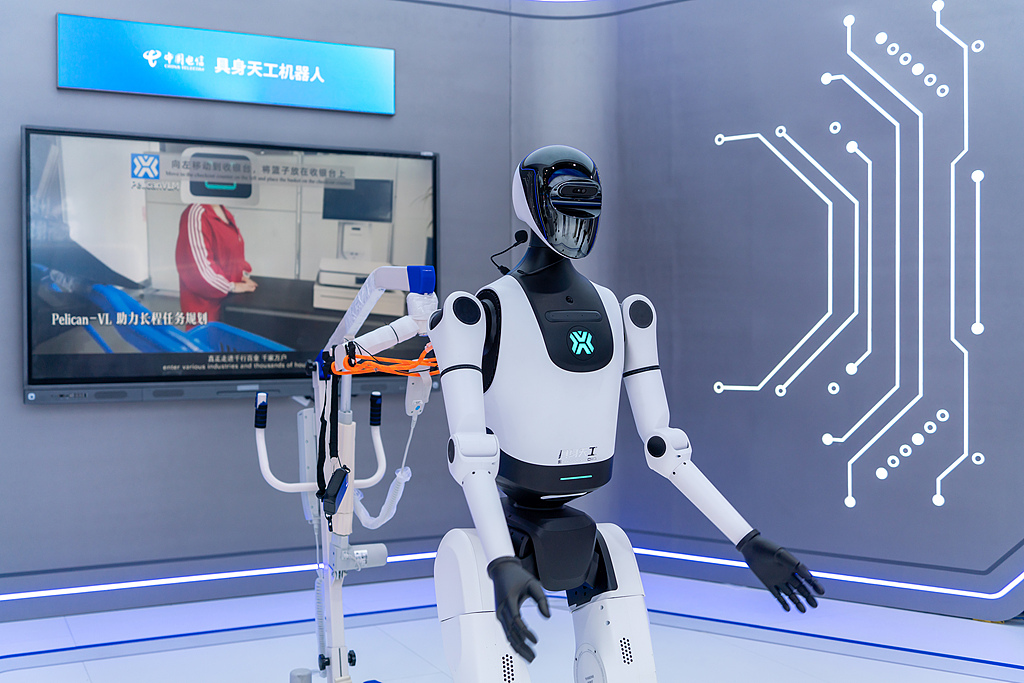
However, the path to 2027 still faces significant bottlenecks, particularly in the cost-to-performance ratio. While China currently benefits from a massive ecosystem of over 100 robotics-related enterprises, reducing the BOM (Bill of Materials) cost remains the primary challenge for wide-scale service sector adoption. Currently, a high-spec humanoid can cost as much as a luxury vehicle, but to hit the 10-billion-yuan revenue targets, manufacturers must leverage their integrated supply chains to drive unit costs down by at least 40% to 50% over the next 24 months. The solution lies in the modularization of hardware—creating standardized "plug-and-play" joints and sensors that can be mass-produced at scale, much like the smartphone supply chain evolved a decade ago.
From my perspective, the winners in this 2026-2027 cycle will be the firms that can effectively "close the loop" between real-world deployment data and model refinement. It is one thing to train a model in a simulation with zero gravity or friction errors; it is another to have a fleet of 500 robots operating in a humid, 35°C factory environment for 16 hours a day. The ability to ingest that "noisy" physical data and update the foundation model is the ultimate competitive moat. If Chinese firms can maintain their 90% share of global robotics exports while increasing the intelligence density of their products, we aren't just looking at a better robot, but a fundamental restructuring of global industrial productivity.
News source: https://peoplesdaily.pdnews.cn/tech/er/30051957138